He didn't make the game — but three years later, he made the boat
The story behind Wada Hoppah's "Just Get On" — and the electric propulsion and battery guidance that helped make a century-old idea finally work.
Drew Rollert never made the game. The rideshare bailed. The bus ran late. Boston traffic did the rest. Stuck near the Charles River with nowhere to go, he noticed something most people walk past: a city dock, built more than a hundred years ago and used for almost nothing since. The reason was simple. The city regulated gas motors on the river, so a ferry that could actually serve that dock was never viable. The landing was ready. The boat had never existed.
Rollert decided to build the boat.
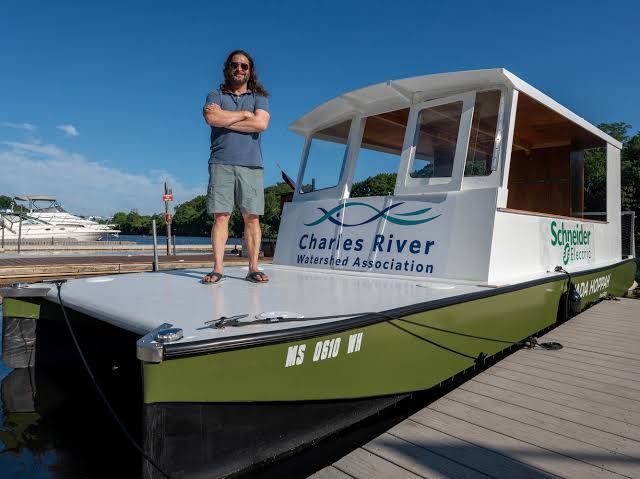
Three years IN THE MAKING
Building it took three years. Most of that time went into working with city officials, not into the water. Rollert, a software engineer who grew up sailing on the Cape, teamed with Concord boat builder Inriver for roughly eighteen months of design and construction.
Winning over the river meant answering to the people already on it. Rowers have shared these waters for a century, so Rollert designed around them: a wakeless hull modeled on the coaching launches they already trust, licensed captains at the helm, and a 360-degree AI collision-detection system watching the water alongside the crew.
The recognition arrived before the boat did. In 2024, the project won a Gussie Award for Electric Commercial Passenger Vessels: In Development — an early sign the industry saw what Rollert was building before it ever floated.
Where Electrified Marina came in
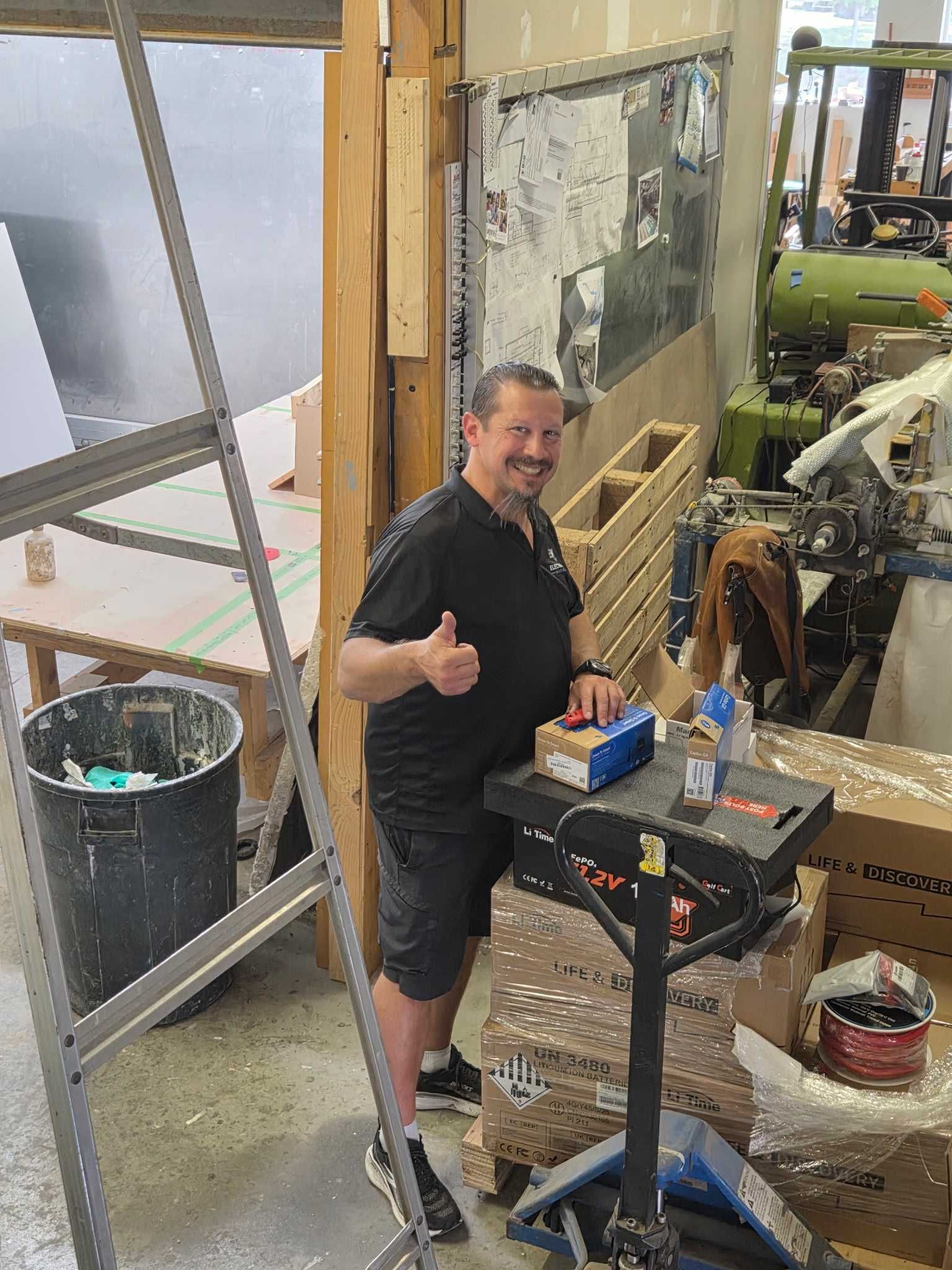
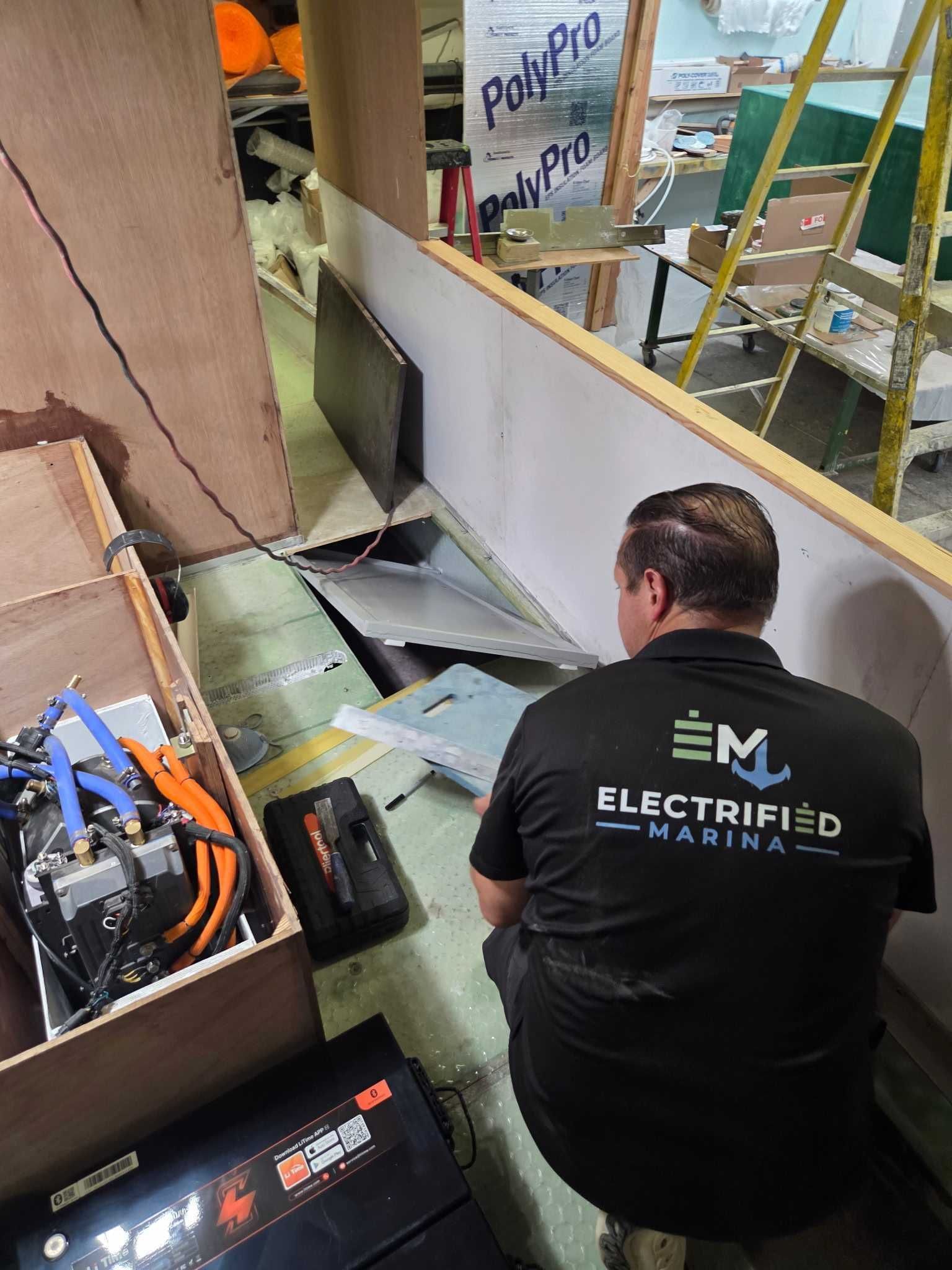
Rollert had a route, approvals, a dock, and a builder already at work on the hull. He and Inriver had sourced the major components too — two 48V Electric Yacht QuietTorque™ 15.0 LC motors and a bank of LiTime LiFePO4 batteries.
What he needed was someone who knew how to make an electric propulsion system actually work on a boat like this: how to set it up, how to configure the battery bank, and how to make it run reliably on a shallow-draft, wakeless hull where there was no room for error.
Rollert found Electrified Marina through the company's work in electric marine propulsion. Electrified Marina advised on the propulsion setup and the LiTime battery system — the configuration decisions that turn a set of sourced components into a working electric powertrain. On a river where gas engines are off the table, getting that setup right was part of what made a wakeless, shallow-draft electric ferry viable.
What "Just Get On" actually is
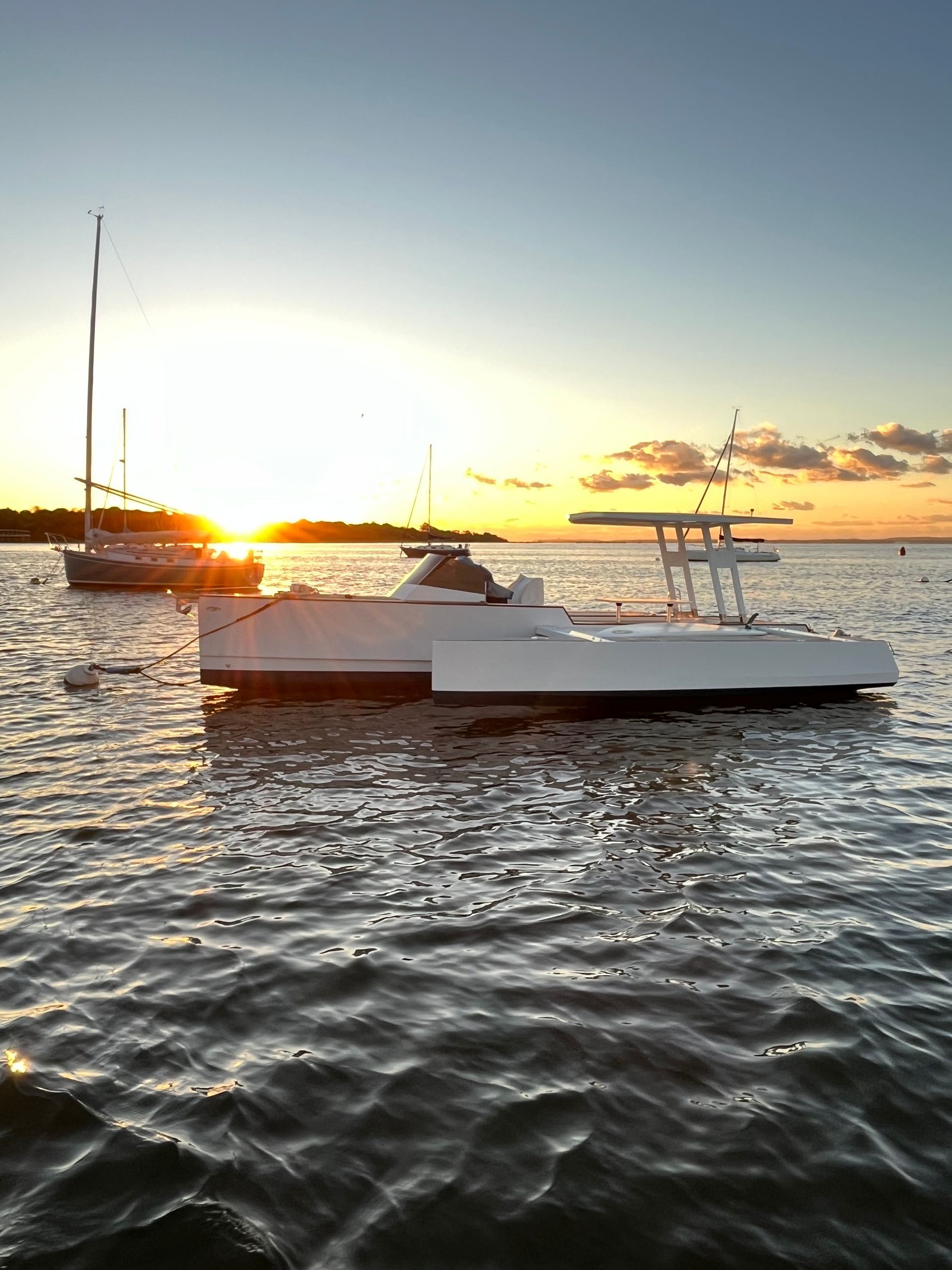
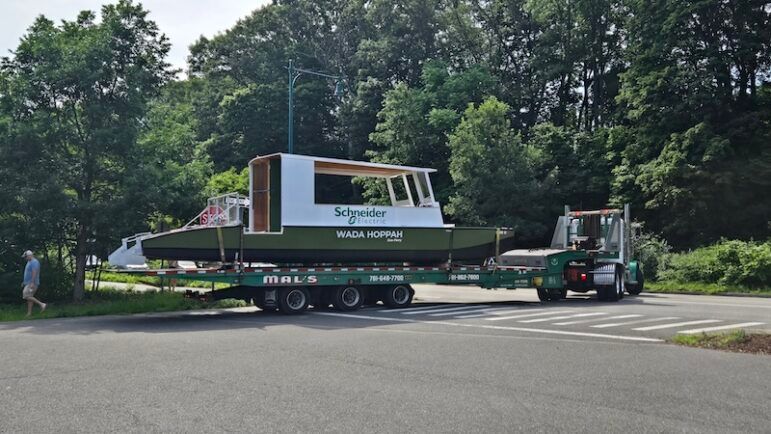
Just Get On is a 35-foot, fully electric, wakeless ferry. It covers Watertown to Beacon Hill in about 40 minutes, carries 20 passengers, and draws just 14 inches to clear the river's shallow stretches. Because it throws no wake, it won't disturb the rowing crews or erode the banks. Two bathrooms, enclosed heated seating, and an estimated fare of $12 to $18 make it a real alternative in a region that ranks among the country's worst for traffic. The name is deliberately plain.
Wada Hoppah built the boat for residents, not tourists, and Just Get On is meant to sound the way people around here actually talk.
In the water, and running on batteries alone
This summer, it happened. Watertown Police escorted the boat down Mt. Auburn Street from the shop to the river, where Just Get On became the first commercial ferry to run on the Charles in about a hundred years. Other ferries in the region run hybrid systems. This one runs on batteries alone.
The boat isn't finished, and it isn't in service yet. Railings, side windows, and back gates still have to go on over the coming weeks while the crew tests the boat's systems on the river. But the vessel is in the water and moving under its own power — and for three years, both were open questions.
"Wada Hoppah is pleased to be teaming up with Electrified Marina to bring the next major change in maritime passenger transportation to Massachusetts and by extension, the United States. No-direct-emission, clean transportation is the future of the maritime community, and critical partnerships like ours play a major part in its success going forward." — Drew Rollert, Owner and Founder of Wada Hoppah
From advising a build to a full repower
The Charles River project is one part of what Electrified Marina does: advising a build team on electric propulsion and battery setup when they have the boat and the components but need the expertise to make it all work together.
The other side (besides finding your perfect boat that already exists) is taking the whole job. Electrified Marina performed the complete electric repower of Tempe Boat Cruisin' in Arizona — a hands-on conversion from a conventional drivetrain to clean, quiet electric power, start to finish.
Between the two, the throughline is the same: electric propulsion and battery systems for boats on waterways with real constraints — shallow water, wake limits, and restrictions on gas engines. Whether a customer needs guidance through the hard parts or a full conversion, a boat that can't run a combustion engine isn't a dead end. With the right electric setup, engineered for the conditions, it's a boat that gets to work.
What comes next
Just Get On is a prototype — a proof of concept. Once it clears its remaining checkpoints and marine classifications, Rollert plans to put more boats on the water, scaling toward a full-size Eco-Ferry fleet. Passenger service is targeted for Summer 2026, pending permits from the Massachusetts Department of Conservation and Recreation.
A century after the city built a dock it could never use, the river finally has a boat that fits it.
Boat of the Month