How can we extend range, without adding more batteries?
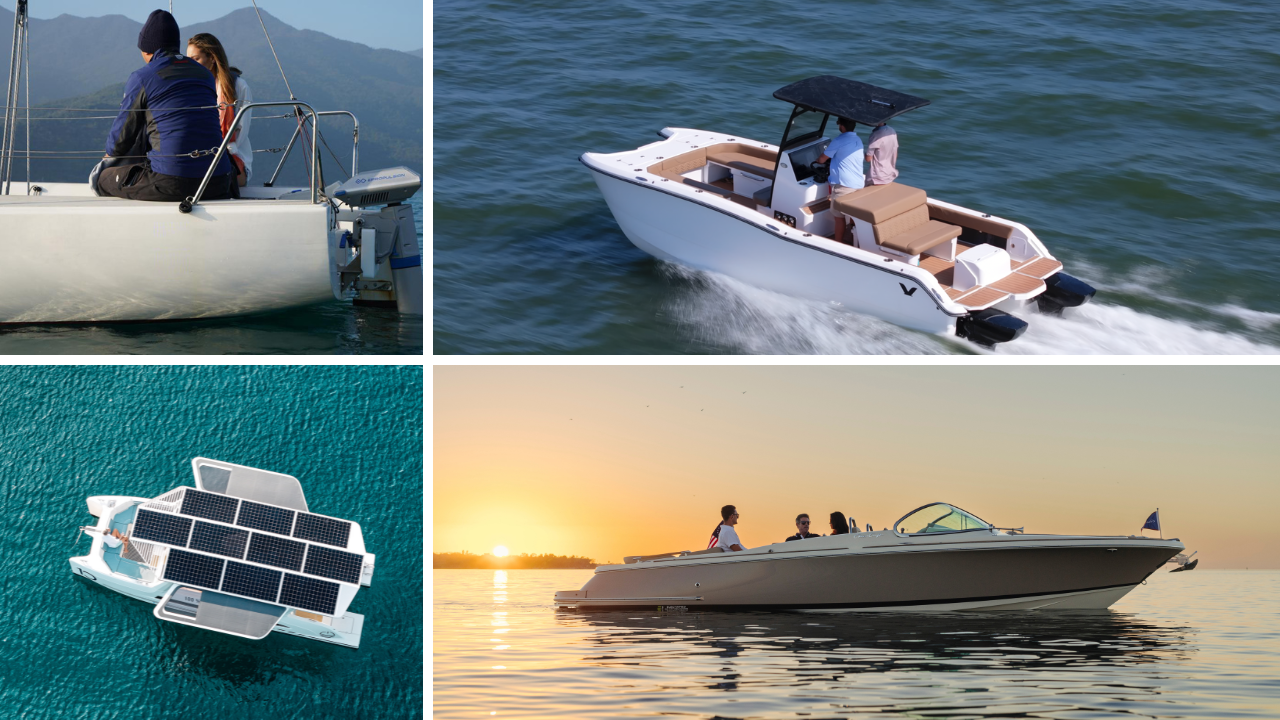
Range is the first question at the showroom, and it has an obvious answer: more battery. It's also the answer nobody in the industry wants to give. Batteries are heavy, expensive, and eat the space you'd rather fill with people.
The real advancements are happening elsewhere — in motor geometry, hull shape, recovered energy, and how the power gets made in the first place. Four different attacks on the same problem.
What connects them isn't a chemistry breakthrough. Not one of these four was invented for a boat.
EVOA - Stackable Motors
Almost every electric motor you've met is built like a can, with the rotor spinning inside the stator. An axial flux motor is built like a pancake instead — the rotor sits beside the stator rather than inside it. That lets the spinning part be much wider, and a wider spinning part makes more torque from the same magnets and copper.
EVOA's E1 uses motors from YASA, an Oxford spinout now owned by Mercedes-Benz. It was originally built for a sports car project. EVOA made it work on the water.
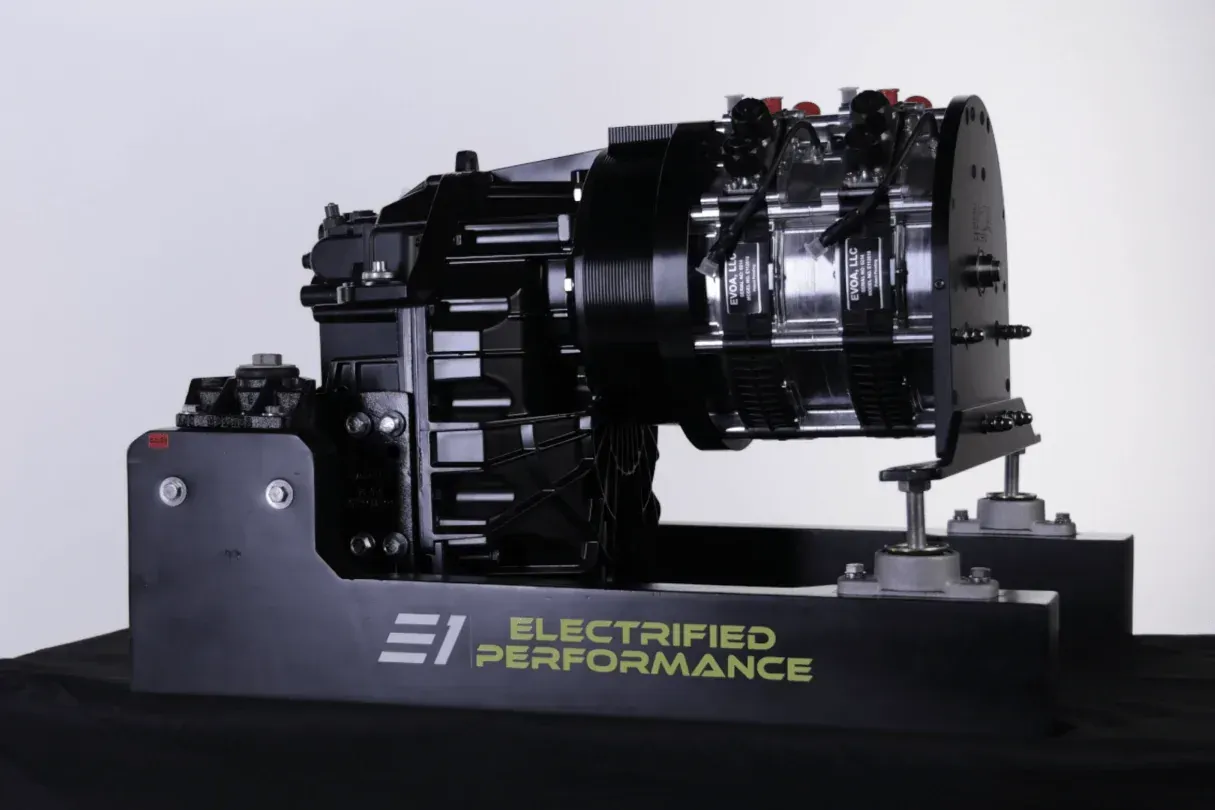
Flat motors stack. EVOA sells the E1 as a single unit at 225 horsepower or a pair at 450 — no redesign, just another motor bolted on. The torque arrives low enough to turn the propeller shaft directly, so the gearbox disappears along with its noise and its service interval. And the same motor family fits stern drive, V-drive, shaft, jet, and outboard, which lets a builder use one supplier across a whole model line instead of four.
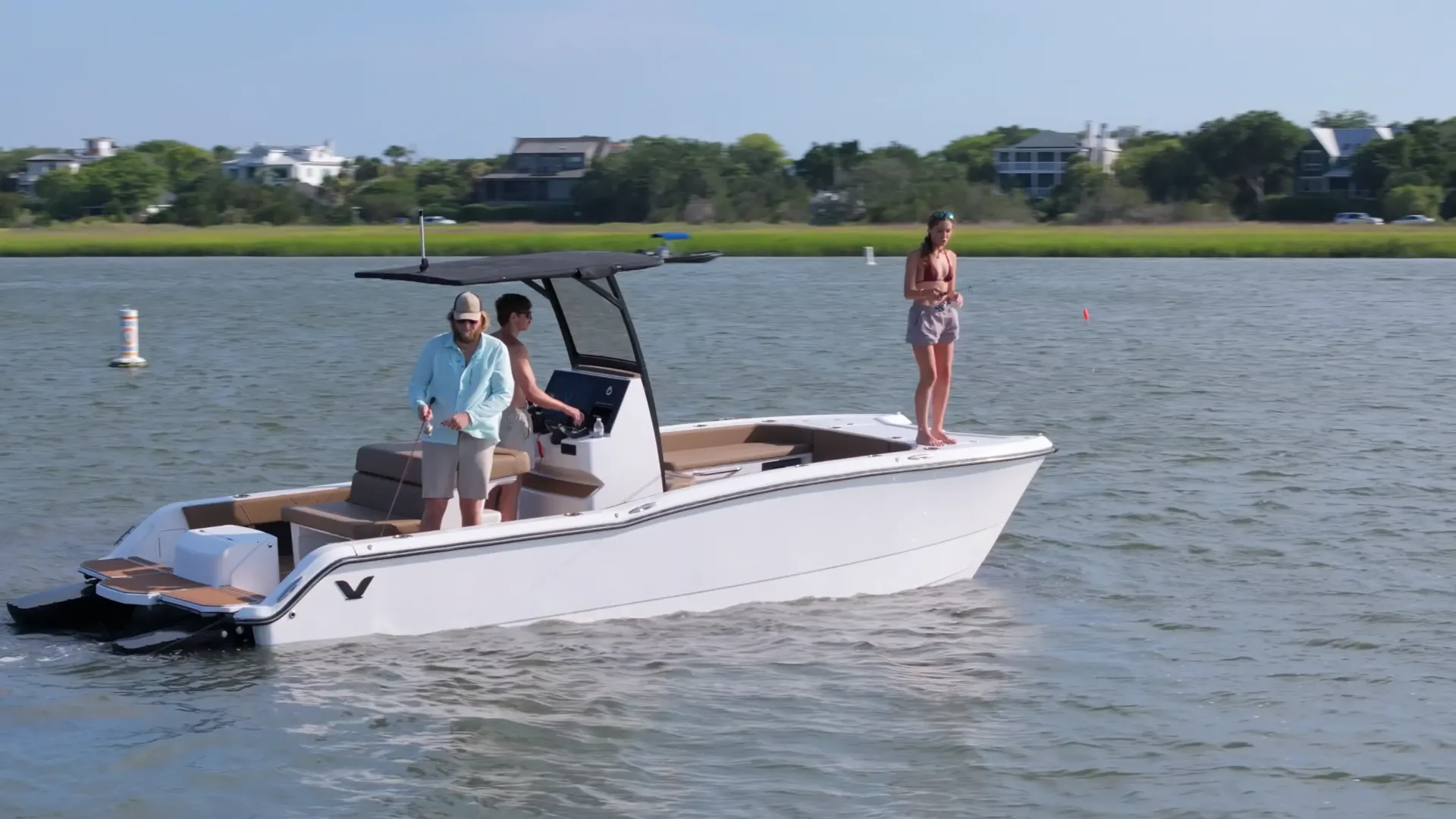
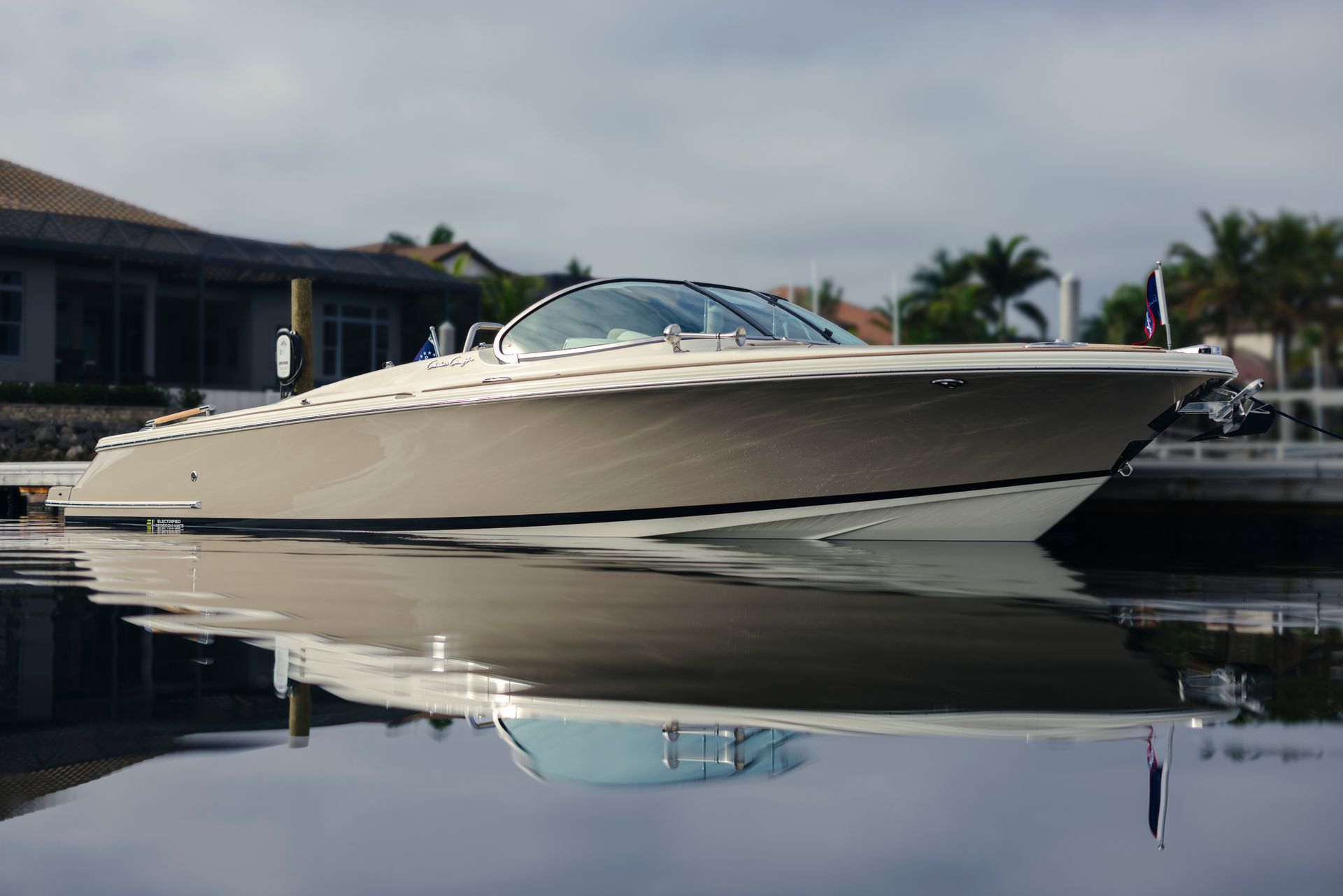
Chris-Craft's Launch 25 GTe is the one you've probably seen: a sterndrive bowrider from a builder that's been at this since 1874, running 420 horsepower off a 133 kWh bank — and yes, you can buy one.
- More torque from the same magnets and copper
- Add power by stacking, not redesigning
- No gearbox: fewer parts, less noise
- One motor family across every drive type
ePropulsion - Hydrogeneration
Cruising sailors have been solving this one by hand for decades — towed generators, prop shafts left unlocked, an hour of engine time at anchor just to put amps back in the house bank. The energy was always there in the water going past. Capturing it was the tricky part.
Hydrogeneration makes it automatic. Under sail, water flow spins the propeller, the propeller turns the motor, and the motor runs backward as a generator. It's regenerative braking, borrowed from the car in your driveway and pointed at a different problem.
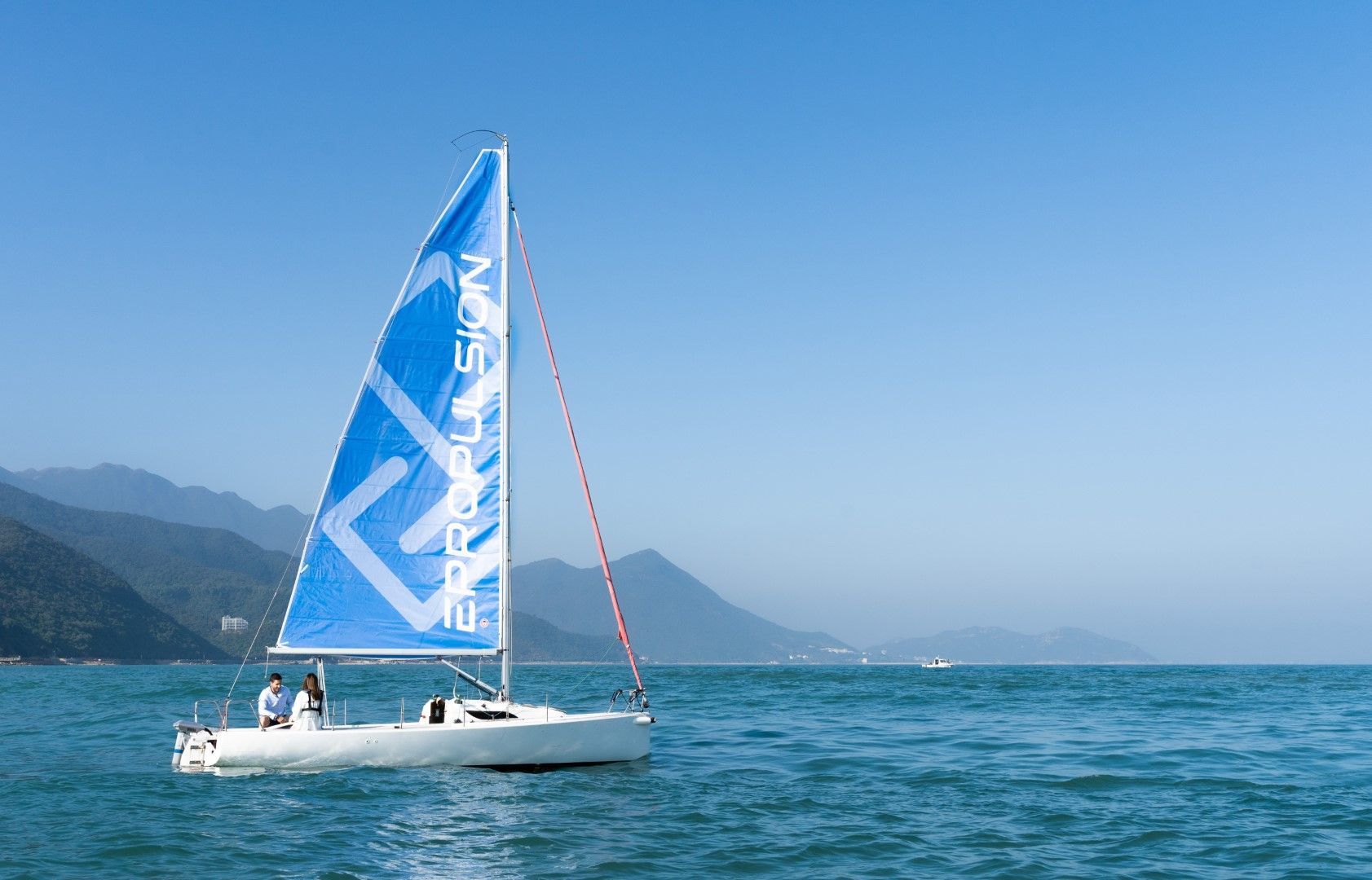
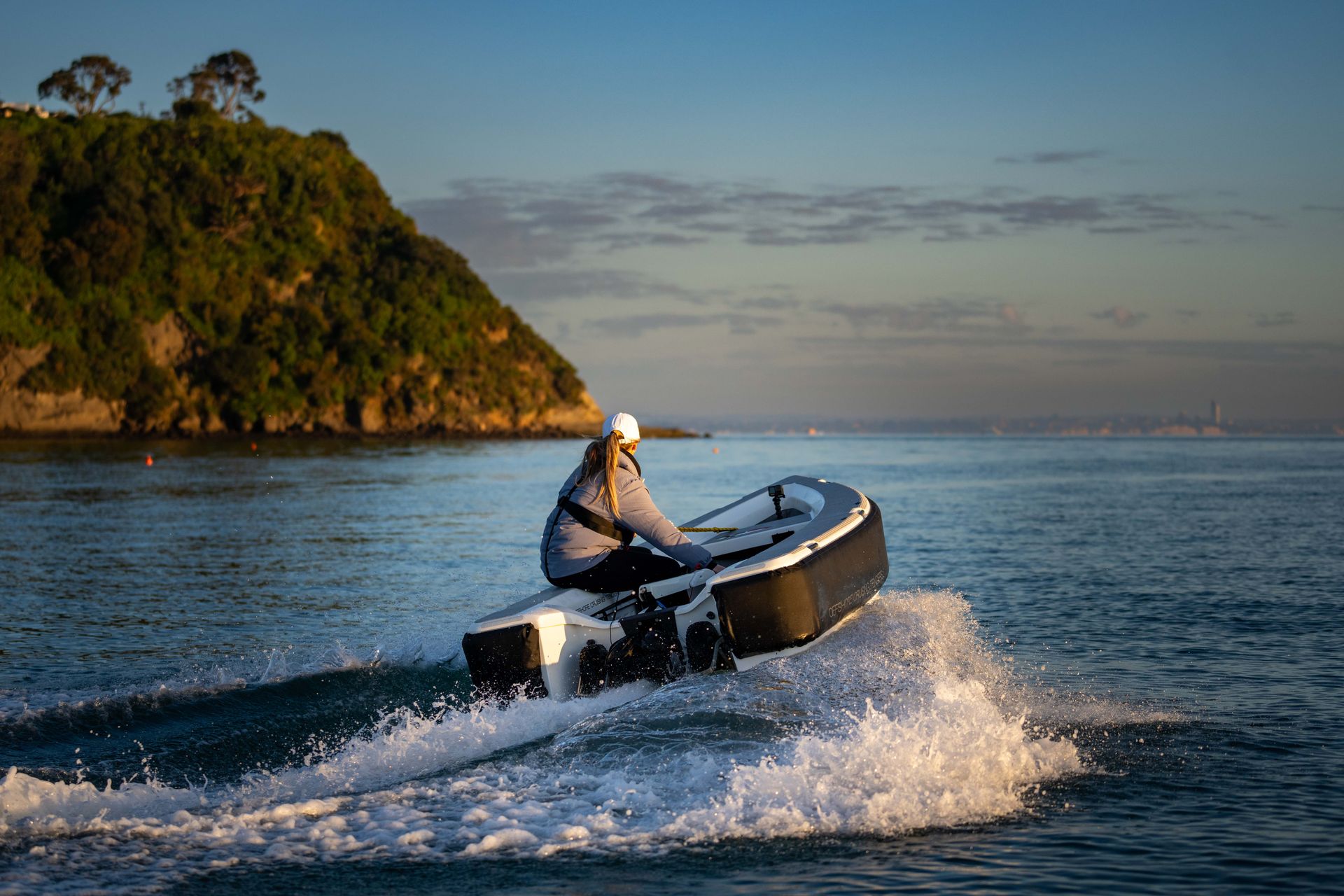
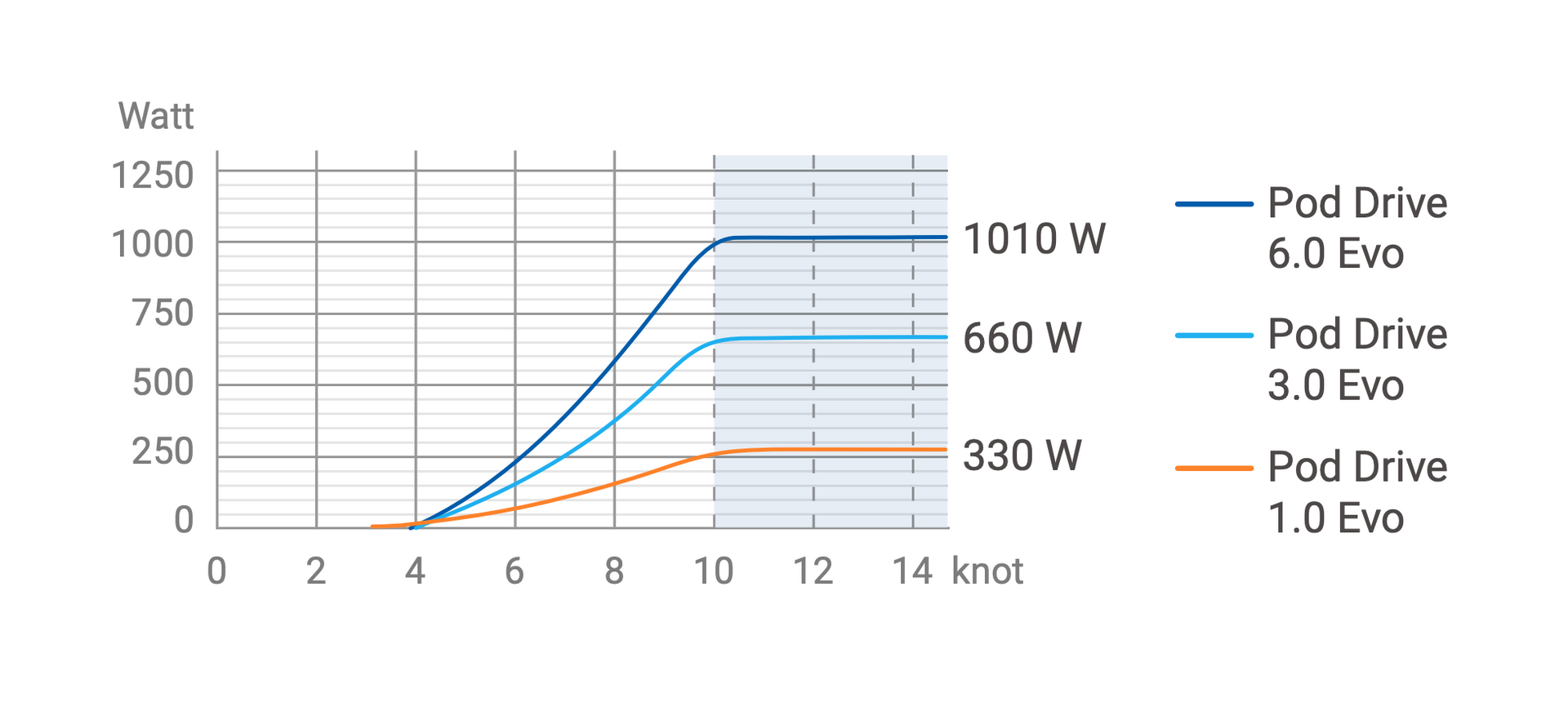
ePropulsion put it across the full outboard line in 2021, and it operates between roughly 4 and 10 knots. At the top of that window, the company's own figures: about 330W from a Spirit 1.0 Evo, 660W from a Navy 3.0 Evo, 1,010W from a Navy 6.0 Evo. The window exists because output climbs steeply with boat speed — a knot or two makes a disproportionate difference.
A kilowatt won't refill a large bank in an afternoon, but that's the wrong measure. On a long passage with no shore power, the value isn't the kilowatt-hours — it's not having to start an engine to get them.
- Recharges under sail between 4 and 10 knots
- Roughly 330W to 1,010W depending on model
- Slight drag penalty under sail
- Standard across the outboard line since 2021
Volare: Hydrofoil Assist
Aviation worked this out first. A wing makes lift by moving through a fluid, and water is a fluid roughly 800 times denser than air — which means a very small wing can carry a very large boat.
A hull moving through water fights two things: friction across its wetted surface, and the energy it spends building the waves it leaves behind. Both scale hard with speed, and a planing hull has to climb over a drag hump before it settles. A foil sidesteps the whole argument. Lift rises with the square of speed, so past a threshold the foil is carrying enough of the boat's weight to raise the hull, wetted area collapses, and friction and wave-making drop with it. Research comparing foiling and planing craft found the foiler drew nearly constant power while the planing hull spiked at the hump.
Yacht racing did the development work, with decades of America's Cup money chasing speed rather than range. Volare's founders were direct about why they picked it up: a foil was the path to range and efficiency numbers that could stand next to gas. Nothing about the foil is new. Using one to buy range instead of speed is.
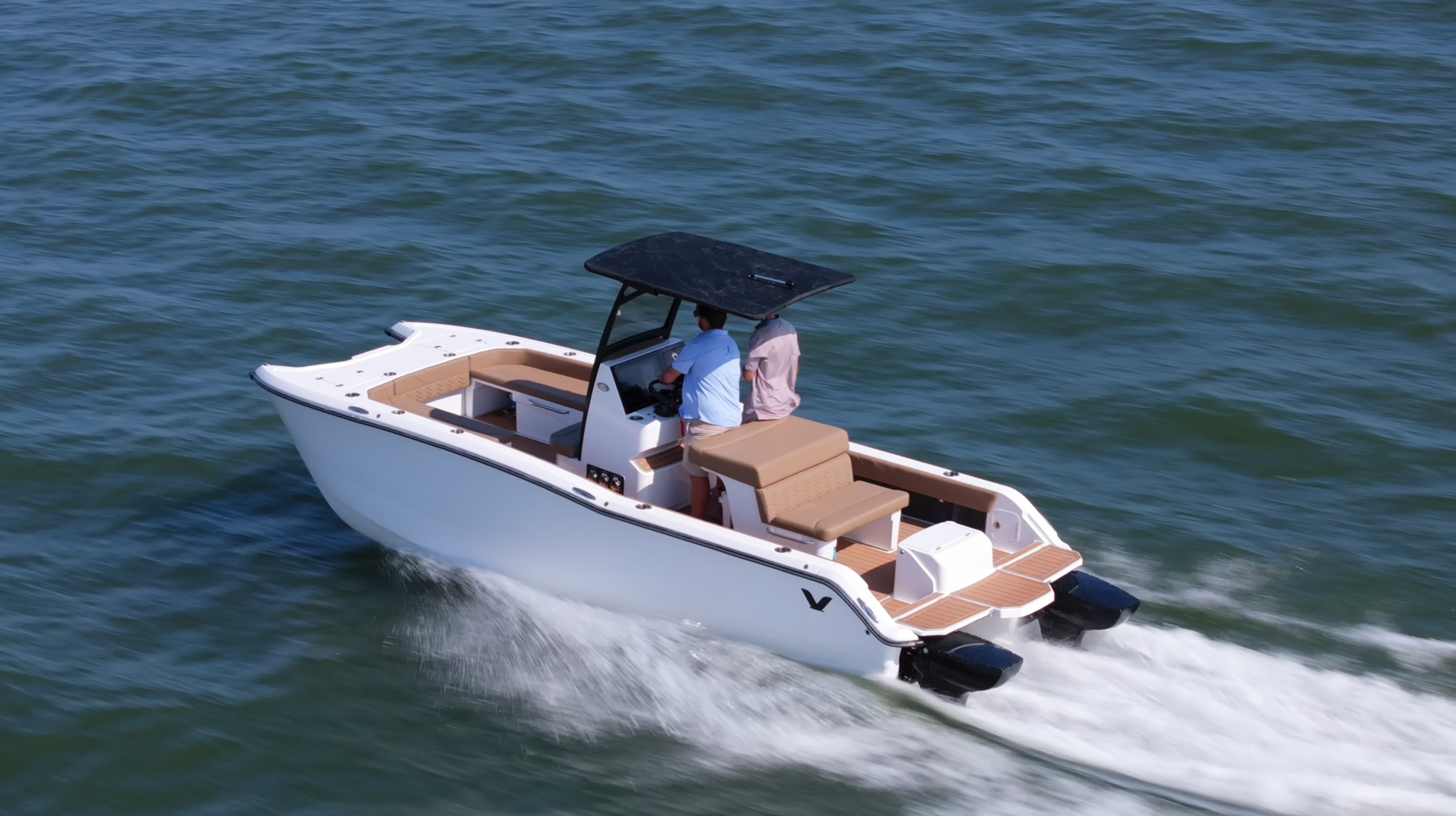
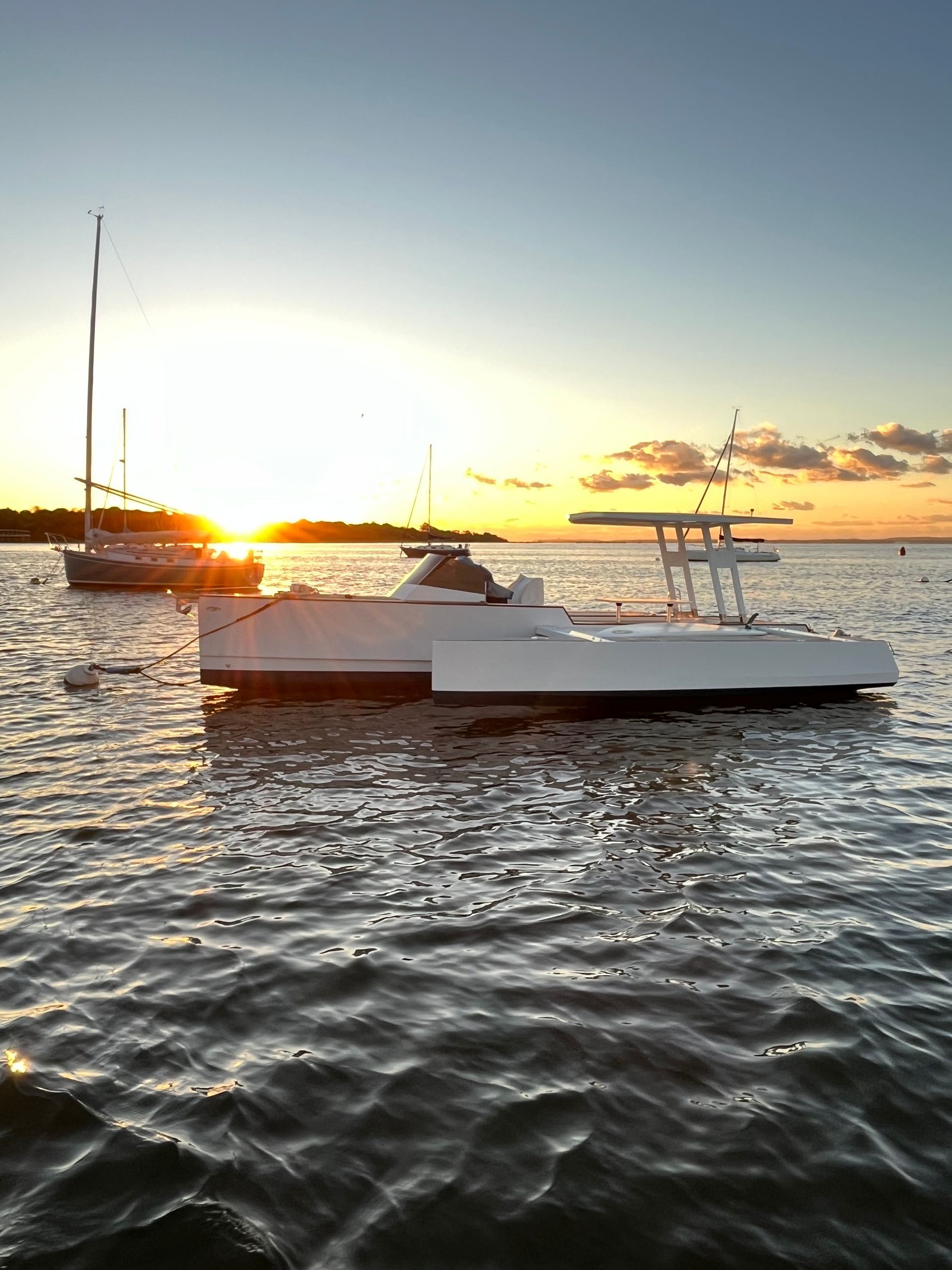
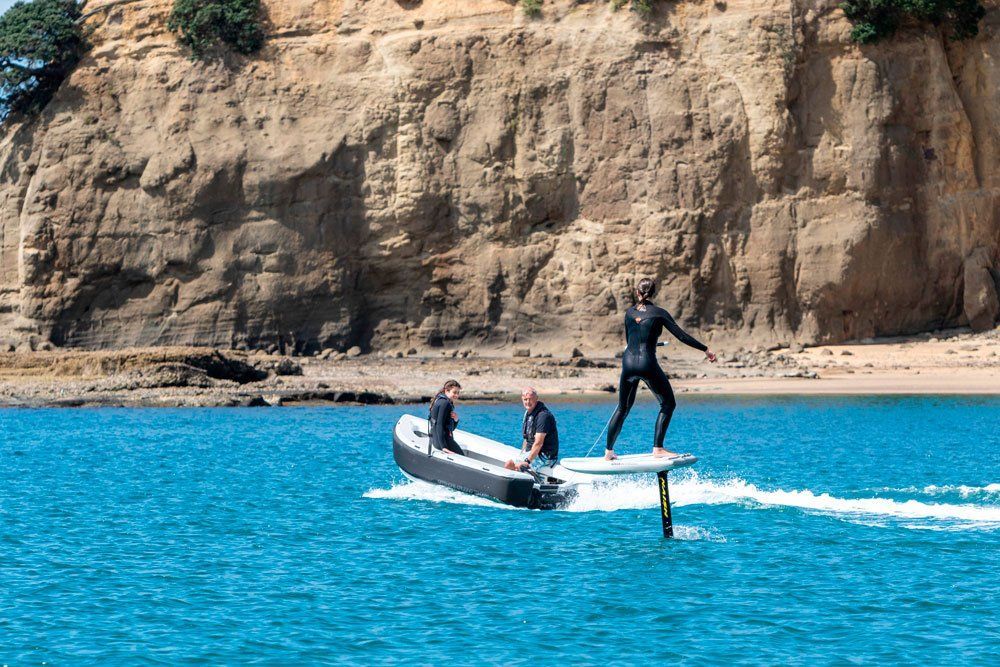
The Artemis 23 is a 23-foot electric catamaran with a foil in the tunnel between the hulls. It's semi-foiling by choice, not compromise. Fully foiling craft need active control systems constantly adjusting to keep flight stable, and that's complexity, cost, and a new set of ways to fail. A foil slung between two hulls is inherently more forgiving — it lifts enough of the boat to matter and leaves the hulls to do what hulls do. On the standard 60 kWh pack it's rated for 50 nautical miles at 23 knots, topping out at 26 knots — about 30 mph. Larger packs go up from there.
The benefit owners tend to mention first isn't range at all. The foil behaves like suspension, rising and falling with the waves, so chop that would beat you up in a monohull gets absorbed instead.
- Cuts friction and wave-making at once
- 50 NM range at 23 knots
- Foil doubles as suspension in chop
- 36-mile test run finished with 15% left
Elvene and Millikan: onboard solar
Solar cells went to space before they went anywhere else. A satellite has no way to refuel, so when Vanguard 1 launched in 1958 it carried silicon cells on its shell — and kept transmitting for years after its chemical battery went flat. Every panel since, on a roof or a boat deck, descends from that constraint.
The math on a boat is more forgiving than it sounds, because the question isn't whether a panel can out-produce the motor. It's whether it can out-produce the motor at the speed you actually cruise. Power demand climbs steeply with speed, so somewhere down the throttle range there's a crossover point where what the array makes matches what the motor draws. Above it you're spending battery. Below it, range stops being a number you have to think about.
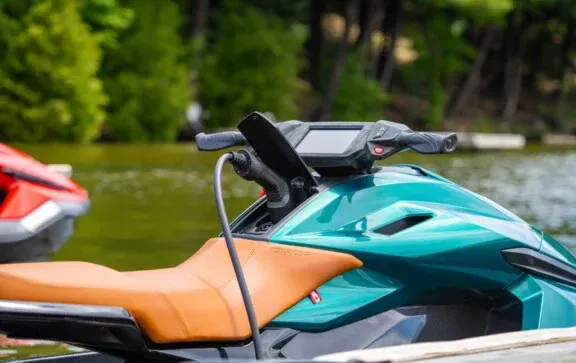
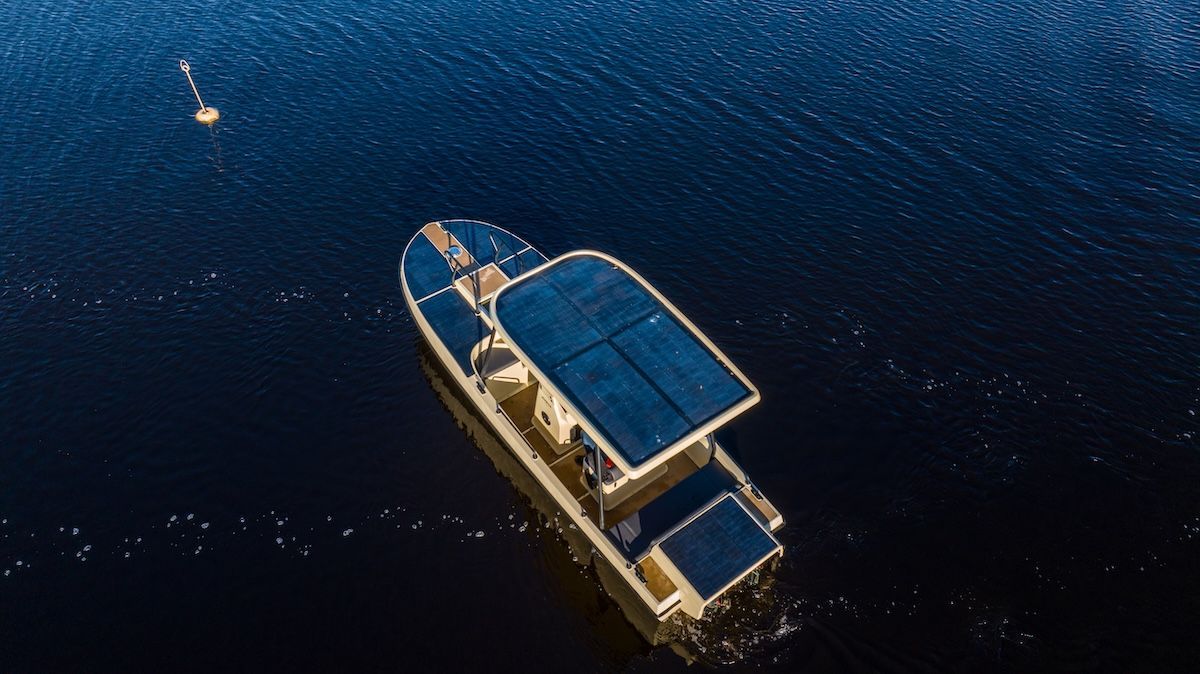
Elvene builds around that crossover. The AMY is a 6.5-meter Finnish boat running a 50 kW Molabo ARIES outboard, and it planes — 30 knots flat out, roughly 35 nautical miles at a 20-knot cruise off a 45 kWh bank. Back the throttle down to 5 knots and it enters what Elvene calls solar sailing, where an 800 to 1,300W array covers the draw and range becomes a function of daylight rather than battery.
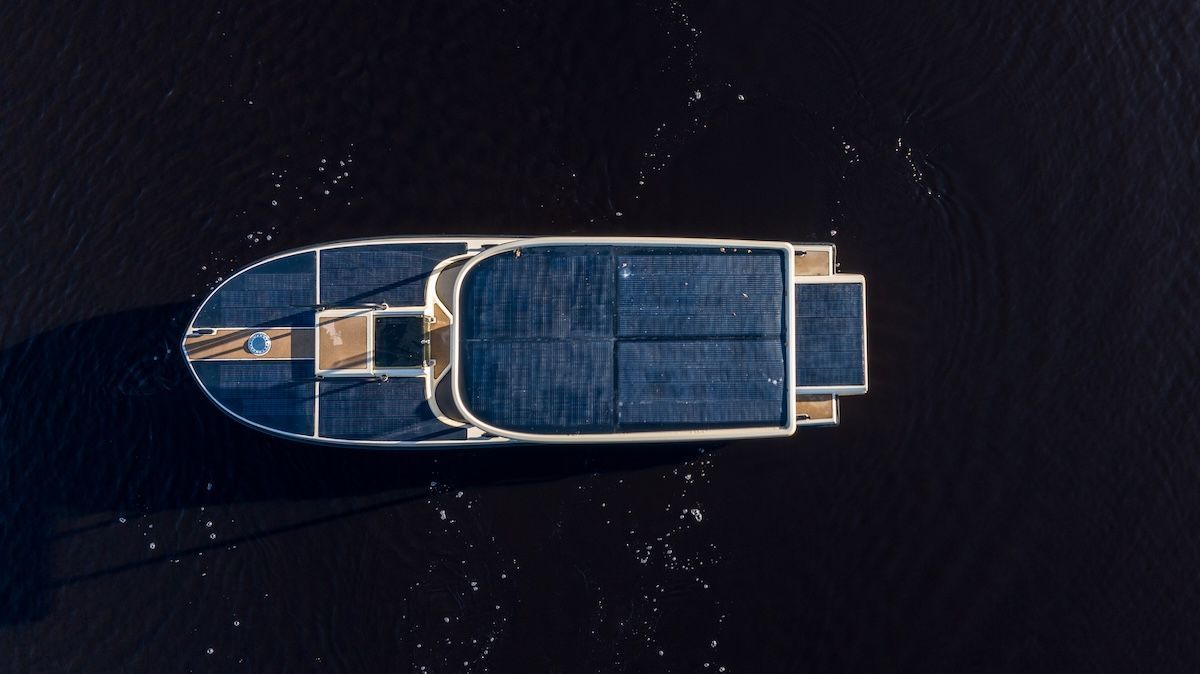
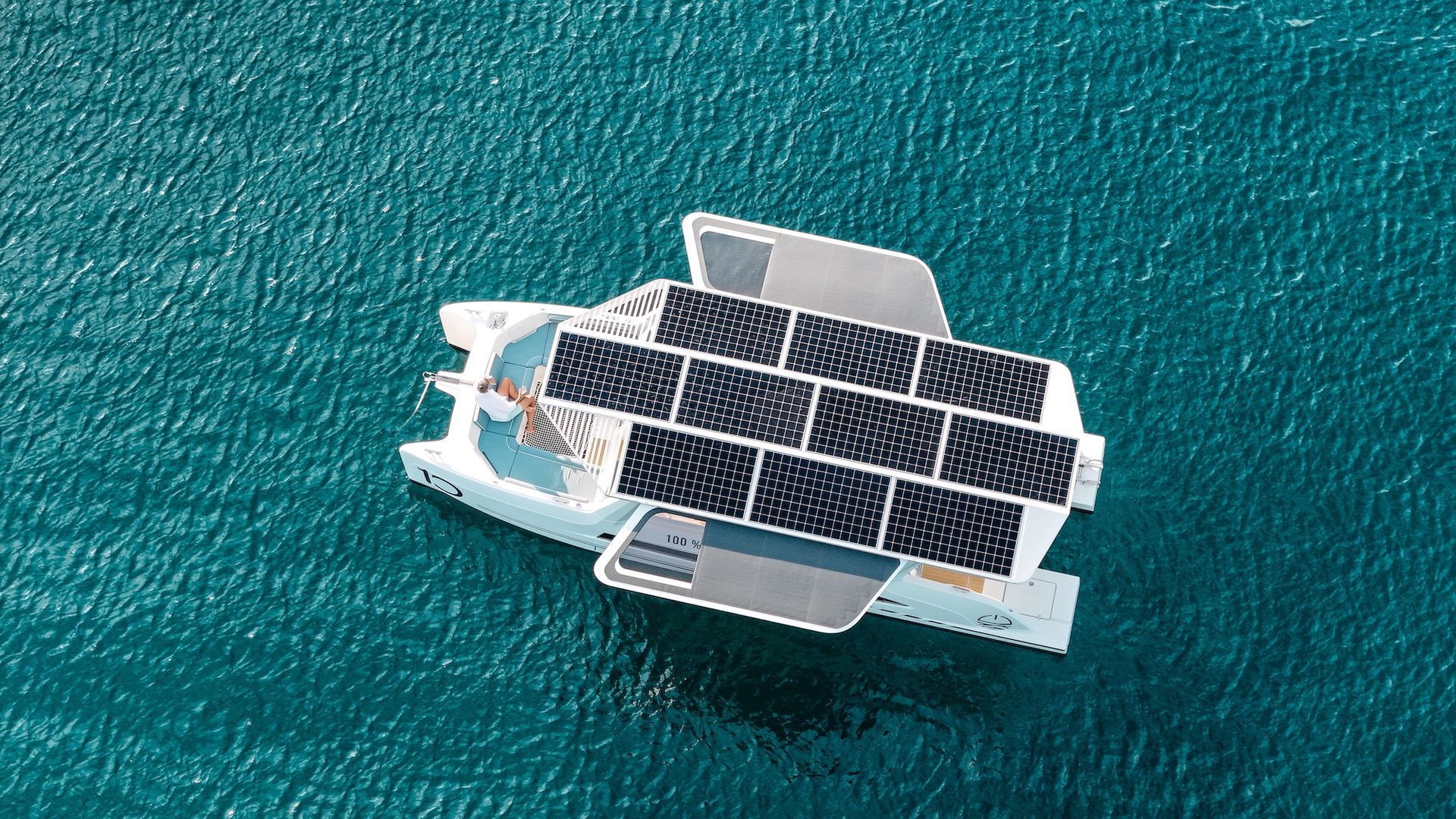
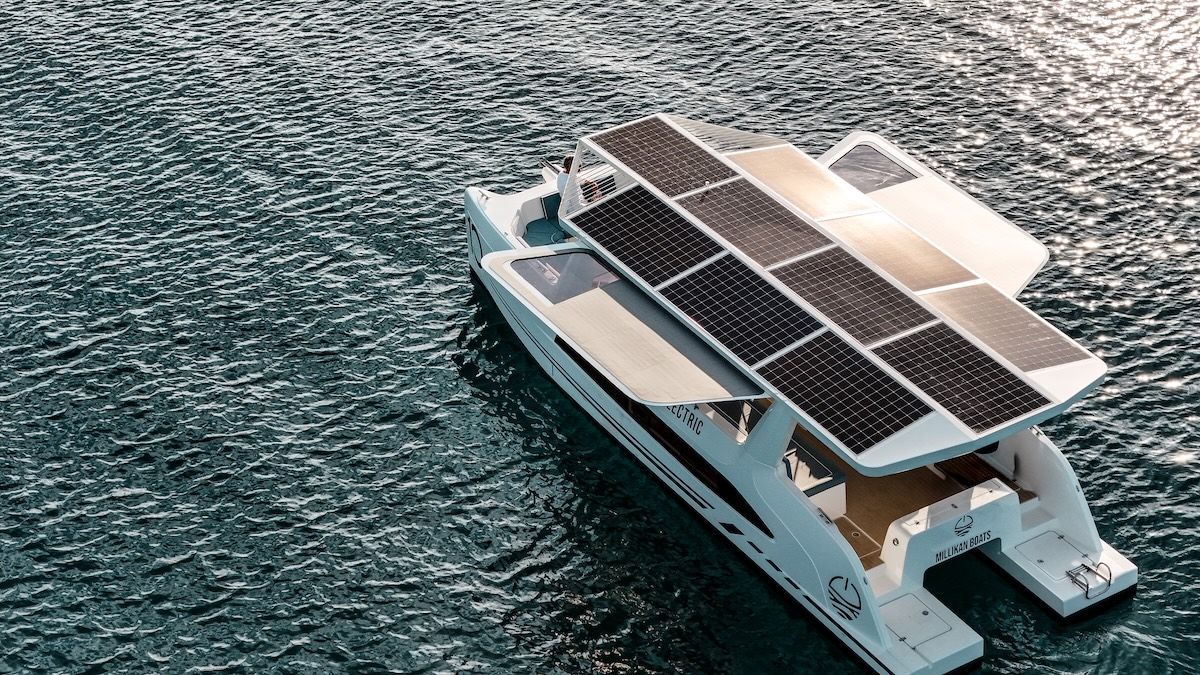
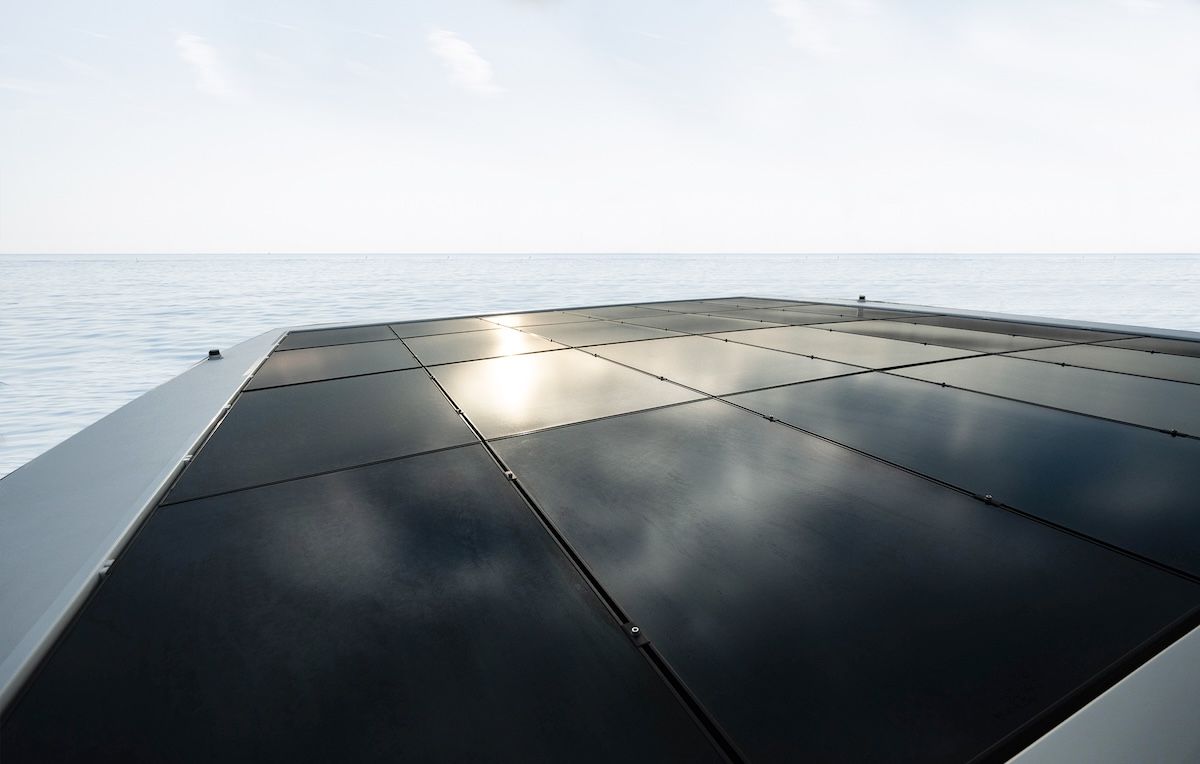
The M.10 is a 10-meter French catamaran on twin 20 kW Bellmarine motors, and its solar wings deploy from the coachroof to widen the boat from 3.4 meters to 5.5. Ten panels sit on the roof; the two out on the wings are bifacial — glass on both faces — so their undersides harvest light bouncing up off the water, which Millikan measured at roughly 20 percent more yield.
That trick comes from utility solar farms, where bifacial arrays pick up albedo off the ground. Altogether, it's about 6 kWp feeding a 41 kWh bank, good for something near 90 nautical miles at 8 knots.
- Below roughly 5 knots, solar power covers the draw
- AMY: 30 knots top, 35 NM at a 20-knot cruise
- Bifacial wings harvest glare off the water
- 48V drive: safe to touch, simple to service
The Bigger Picture
Four problems, four answers, and not one of them was drawn up for a boat. Axial flux came out of a university lab and a carmaker. Regeneration came off a brake pedal. Foils came from aviation, then from yacht racing, where the point was speed rather than miles. Photovoltaics came from satellites that had no other way to stay powered.
The marine industry spent most of a century solving its own problems on its own budget. It doesn't have to anymore. Carmakers, aerospace, and the energy sector are funding this research now, and boats pick it up a few years later.
Which is why the biggest battery is the least interesting number on a spec sheet. The question worth asking is which of these four fits the way you use a boat — the miles you run, the speed you hold, and how far your slip is from a plug.
Ready to experience electric propulsion on the water? Reach out to schedule a sea trial.
Boat of the Month